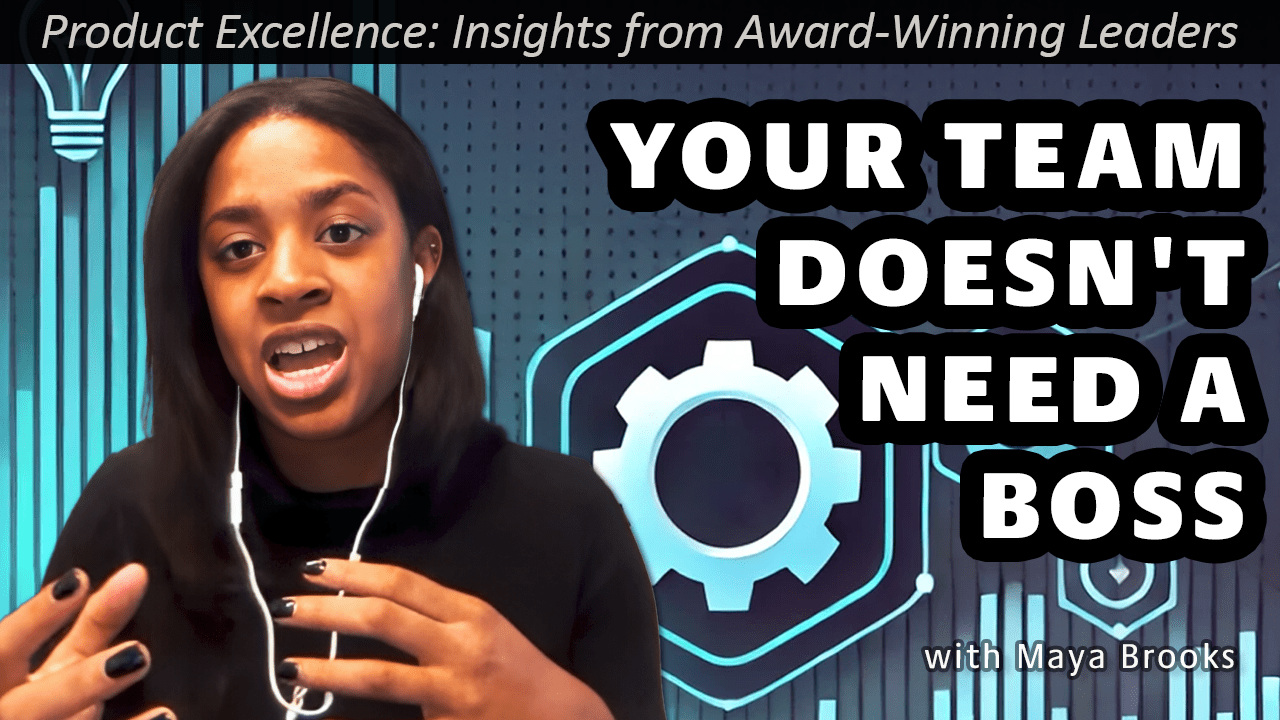

Product manager responsibility gets described in familiar terms: roadmaps and prioritization. Maya Brooks, Product Manager at Klaviyo and an award-winning PM with over a decade of experience, starts at a different level. She defines the PM’s core responsibility as building a system where the team can thrive.
In a recent Product Excellence conversation, Maya explained her reasoning. It starts with a reality of the role: you have no direct authority over anyone on your team. Engineers and designers do not report to you. Their compensation is not tied to following your direction. You operate through influence and the quality of the environment you create around the work.
That framing changes what product manager responsibility means in practice. The PM is responsible for the conditions under which everyone else can do their best work. Those conditions determine whether a team moves with confidence, and no amount of roadmap precision can substitute for them.
What Empowerment Looks Like at the Task Level
Maya breaks empowerment into its operational components. Each one maps to a specific function the PM performs daily. Clearing up user stories and writing requirements so engineers can work without ambiguity. Making meetings less painful so the team’s calendar supports the work. Increasing transparency so every function can see what is happening across the team. Building communication rhythms that keep information flowing between functions. Conducting user research that grounds the team’s decisions in real customer behavior.
These activities accumulate into the infrastructure that determines whether a team can move or stays stuck. Maya’s framing puts the PM at the center of that infrastructure. The PM ensures that information flows and blockers get cleared. The team’s energy goes toward building.
The implication for how PMs spend their time is direct. Early in her career, Maya expected the role to center on building and shipping. She learned that the majority of PM time goes to supporting work. Researching. Scoping. Making sure every function understands the current state. The system-building work is where the leverage lives.
Alignment as the Measure of PM Effectiveness
Maya describes the end state: a team moving in the same direction, at the same pace, toward the same goal. That level of alignment does not happen by accident. It is the product of a PM who invested in the connective tissue between functions. Transparency mechanisms. Communication cadence. Clarity of requirements that let people move forward.
Her perspective reflects years of building these systems across environments ranging from a 12-person startup to Klaviyo. At the startup level, she built the team’s entire process from scratch. The principles hold across scale. The mechanisms change, but the PM’s responsibility remains the same: build the system, and the team will perform.
In the full Product Excellence interview, Maya walks through how she evolved her process as her team grew. She describes what she tells product managers who feel invisible despite doing the work that keeps everything moving.
🎥 Watch Maya’s full breakdown in the Product Excellence clip on YouTube. Subscribe to The Product Way for more conversations with award-winning product leaders.

